
BLOG
BLOG
Top Signs Your Rotary Cutter Gearbox Needs Replacement — Before It Fails
A rotary cutter gearbox is the heart of a mower or brush-cutter — it transfers power from the tractor PTO to the cutting blades. Over time, wear, fatigue, or misuse can lead to failure. Recognizing early warning signs can save you downtime, expensive repairs, or even injury. Here are the key signs that your rotary cutter gearbox may need replacement — and what to watch out for.
Auditory & Sensory Warning Signs
– Unusual noises (whining, grinding, clunking, growling)
When you hear grinding, whining, or clunking while the cutter is operating (especially under load), this often indicates internal wear: gear teeth wear, bearing damage, or misalignment. These noises typically get louder when the gearbox is under stress, like cutting thick brush or dense material.
– Vibration, shaking, or jerking motion
If the cutter vibrates, shakes, or jerks during operation, that may point to misaligned shafts, worn bearings, or internal gearbox damage. Vibration often means parts inside the gearbox — or the drive/tranny shaft — are no longer running smoothly.
– Burning smell or excessive heat
A burning or acrid smell often signals problems: overheated lubricant, slipping clutch, worn internal components, or friction caused by lack of oil or incorrect oil viscosity. If the gearbox housing becomes too hot to touch for more than a few seconds during regular use, that’s a serious warning sign.
Fluid & Leakage Warning Signs
– Oil leaks or fluid seeping from seals/housing
Leaks around seals, gaskets, or the case — visible oil on the output shaft, “sling marks” under the cutter deck, or oil pooling on the ground — indicate seal failure or housing damage. Without proper lubrication, gears and bearings deteriorate rapidly.
– Contaminated or foamy/milky oil
When gearbox oil looks foamy, milky, or unusually dirty, that may mean water or debris has entered via leaks or vent failures. Contaminated lubricant loses its protective properties, accelerating wear on internal parts.
Performance Degradation & Physical Indicators
– Noticeable loss of power or cutting performance
If the cutter struggles to cut brush or grass it used to handle easily, slows down, or fails to maintain blade speed under load — it could be gearbox slipping internally, worn gears, or declining efficiency due to wear.
– Output shaft play or visible damage
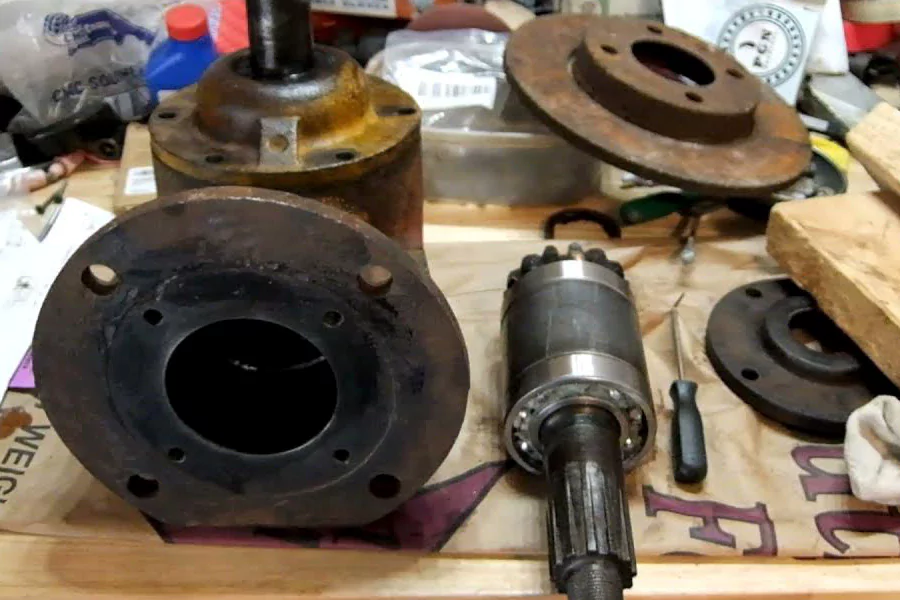
When there is play (lateral or vertical movement) in the output shaft, or visible wear/damage around the shaft area — such as scoring, corrosion, or deformation — that often signals worn bearings or shaft fatigue.
– PTO shaft issues, erratic blade behavior, or gear slippage
If the PTO shakes, blades become unbalanced, the drivetrain stutters or disconnects under load, or if gears slip or fail to engage correctly — these may all be caused by internal damage to the gearbox (clutch, coupling, shaft, gears).
– Case gasket or housing problems
Leaks or misalignment at the case seam (between upper and lower halves), or cracks in the housing — often from stress, impact, or shock loads — are serious. These often mean the gearbox’s structural integrity is compromised and likely beyond economical repair.
Why These Failures Happen
Many gearbox failures stem from a few recurring root causes:
Inadequate or neglected lubrication — low oil level, wrong oil type/viscosity, or oil contamination. Regular oil checks and timely oil changes are critical.
Wear on bearings, seals, gear teeth due to age, heavy loads, or shock impacts (e.g., from stumps, rocks, or uneven terrain).
Imbalanced blades or improper blade mounting, causing excessive vibration and stress on the gearbox.
Overloading the gearbox beyond its rated capacity (too much PTO HP, heavy load, or misuse).
Housing or seal damage due to rough terrain, debris impact, or improper maintenance (e.g., missing vent, incorrect seal installation).
What to Do When You Spot Warning Signs
Stop using the cutter immediately — continuing underload or with leaks may cause full failure.
Inspect gearbox housing, output shaft, and seals — check for leaks, cracks, play, or visible damage.
Check and change lubricant — make sure correct gear oil (proper viscosity, EP-rated) is used, and that the oil is not contaminated or low.
Inspect bearings, gear teeth, and internal components — if teeth are chipped, bearings are rough or shafts wobble, prepare to replace gearbox.
Check blades and driveline alignment — ensure blades are balanced and fixed, PTO shaft properly aligned, and that no coupling or clutch damage exists.
Compare cost of repair vs replacement — often with modern rotary cutter gearboxes, full replacement is more economical than piecemeal repair, especially after major internal damage.
REQUEST A QUOTE
OR GET MORE
INFORMATION
Leave us a message. We will contact within 12 hours.