
BLOG
BLOG
What Happens If You Use the Wrong Oil in a Gearbox?
Using the wrong oil in a gearbox or transmission is not a minor maintenance error. Gearboxes rely on lubricants with specific viscosity and additive chemistry to protect gears, bearings, and synchronizers under high loads. When an incorrect oil is used, lubrication conditions deteriorate rapidly, leading to noise, overheating, accelerated wear, and in severe cases, complete gearbox failure.
This article explains what happens when the wrong oil is used in a gearbox, how to recognize early warning signs, the long-term mechanical consequences, why these failures occur, and what actions should be taken immediately.
Immediate Symptoms of Using the Wrong Gear Oil
When a gearbox is filled with an incorrect lubricant, early warning signs often appear quickly:
Rough or hard shifting — a gritty or resistant feel when changing gears
Abnormal noises — grinding, whining, or metallic banging sounds
Gear slipping — gears jumping out or failing to stay engaged
Overheating — rising gearbox temperature, burning smell, or darkened oil
Poor performance — vibration, reduced torque transmission, or power loss
These symptoms indicate that the oil is not maintaining an adequate lubrication film or friction behavior for proper gearbox operation.
Long-Term Consequences if the Issue Is Ignored
Continued operation with the wrong oil leads to progressive and often irreversible damage:
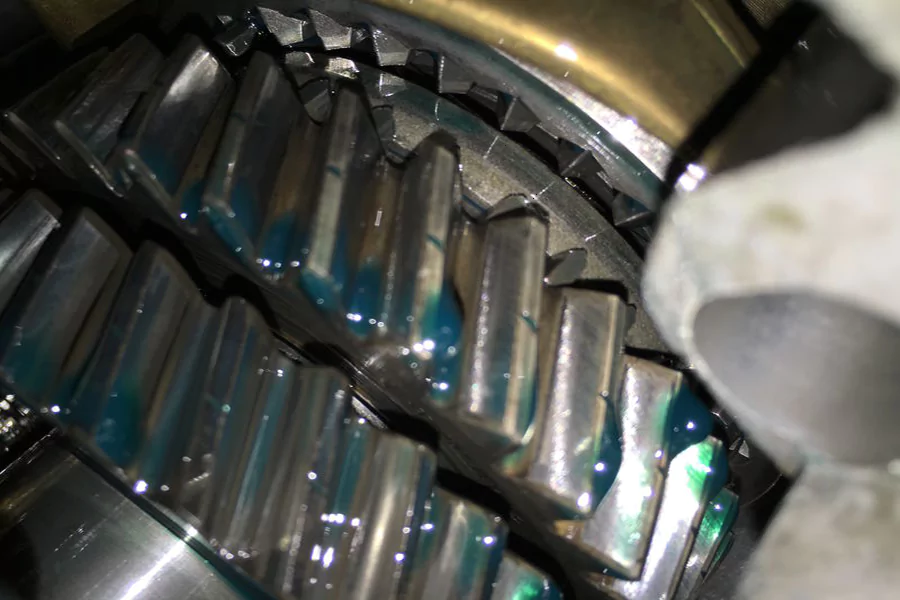
Synchronizer damage — incorrect friction properties accelerate wear of synchro rings and engagement dogs, making smooth shifting impossible
Gear and bearing wear — insufficient protection causes scuffing, pitting, and tooth surface damage
Varnish and deposits — oil breakdown creates residues that restrict lubrication paths and reduce heat dissipation
Thermal overload — excessive friction raises operating temperature, accelerating oil degradation
Gearbox seizure or total failure — severe metal-to-metal contact can result in catastrophic breakdown
In many cases, gearbox replacement becomes more economical than repair once this stage is reached.
Why Using the Wrong Oil Causes Gearbox Failure
Gear oils are engineered specifically for the operating conditions inside a gearbox. Problems occur because incorrect oils lack one or more of the following critical properties:
1. Extreme Pressure (EP) Protection
Gear teeth operate under very high contact stress. Proper gear oils contain EP additives that form a protective layer on metal surfaces. Oils without sufficient EP protection allow direct metal contact, leading to rapid wear and scoring.
2. Correct Viscosity
Gearboxes require a specific oil thickness to maintain a stable lubrication film across gears and bearings. Oils that are too thin fail to protect under load, while oils that are too thick cause poor flow, heat buildup, and efficiency loss.
3. Proper Friction Characteristics
Manual gearboxes and synchromesh systems depend on controlled friction to engage gears smoothly. Incorrect oils alter friction behavior, resulting in poor shifting and synchronizer wear.
In short, the wrong oil disrupts the balance between load, speed, temperature, and lubrication that gearboxes are designed around.
Gear Oil Grades and Viscosity — A Brief Overview
API GL-4 vs. GL-5
GL-4 oils are commonly used where synchronizer compatibility is required, while GL-5 oils provide higher EP protection for heavily loaded gears. Using the wrong API grade can harm internal components or degrade shifting quality.
SAE Viscosity Grades
Common gear oil viscosities include 75W-90, 80W-90, and 85W-140. The correct grade ensures proper lubrication during cold starts and stable film strength at operating temperature.
Always follow the gearbox manufacturer’s specified API classification and viscosity requirements.
What to Do If the Wrong Oil Was Used
Stop operating the equipment immediately to prevent further damage
Drain the incorrect oil completely — do not dilute it by topping up
Inspect the drained oil for metal particles, burnt odor, or discoloration
Refill with the manufacturer-recommended gear oil, matching both viscosity and specification
Arrange professional inspection if noise, slipping, or metal debris was observed — internal components may already be damaged
Prompt action can significantly reduce repair costs and downtime.
Preventive Measures and Best Practices
Follow the gearbox manufacturer’s lubrication chart without deviation
Label oil containers clearly to avoid mix-ups during maintenance
Store gear oils separately from engine and hydraulic oils
Train maintenance staff on lubricant specifications and differences
Maintain service records including oil type, change intervals, and operating hours
These practices help ensure consistent gearbox reliability and extended service life.
Quick Diagnostic Checklist
Wrong oil added? → Drain immediately
Grinding noise or hard shifting? → Stop and inspect
Metal debris in drained oil? → Schedule teardown inspection
Uncertain oil specification? → Check OEM documentation before refill
About JENA
JENA designs and manufactures gearboxes and transmission systems for agricultural and industrial applications where reliability under load is critical. JENA gearboxes are engineered with defined lubrication requirements to ensure durability, thermal stability, and long service life under demanding operating conditions.
When servicing JENA gearboxes, always follow the lubricant specifications provided in the official technical documentation. If incorrect oil use or contamination is suspected, JENA’s technical team can provide guidance on lubricant selection, inspection procedures, and preventive maintenance practices.
Conclusion
Using the wrong oil in a gearbox leads to rapid wear, overheating, poor shifting performance, and ultimately gearbox failure. Immediate drainage and refilling with the correct lubricant are essential to limit damage. By selecting the proper gear oil, following manufacturer specifications, and applying disciplined maintenance practices, costly gearbox failures can be effectively avoided.
REQUEST A QUOTE
OR GET MORE
INFORMATION
Leave us a message. We will contact within 12 hours.