
BLOG
BLOG
Jacquard Loom Gearbox Failure: Causes and Solutions
The Jacquard loom gearbox sits up top, out of sight, keeping quiet. But when it goes down, the whole loom stops. In weaving, downtime costs more than the gearbox repair bill — it’s the order deadlines, and it’s the operator standing around with nothing to do.
Plenty of gearbox failures aren’t actually about the parts inside the gearbox. Pull it apart and the gears and bearings may still look fine. The problem was in a few places nobody paid attention to.
Chain Drive: The Weakest Link in Jacquard Power Transmission
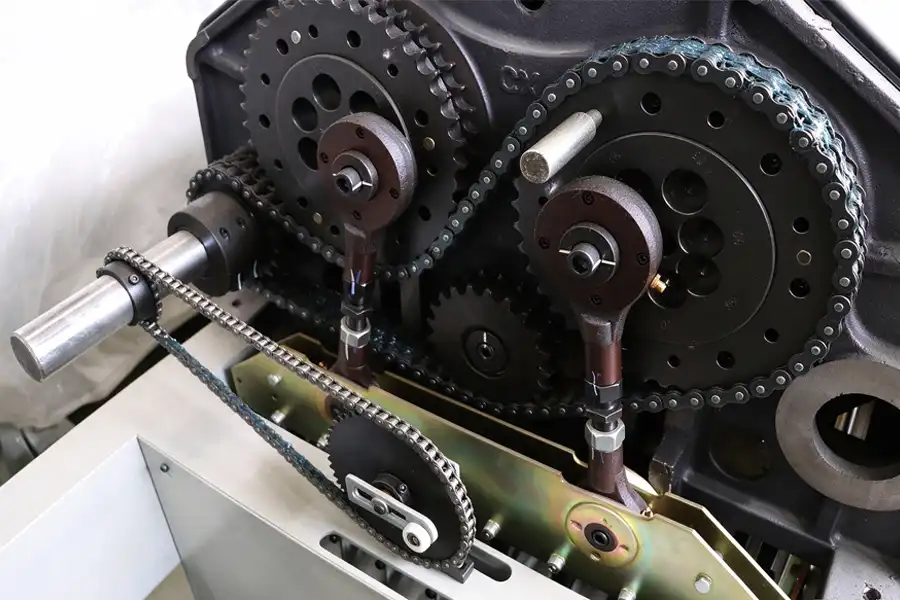
On many Jacquard looms mechanically driven, the power is transmitted to the Jacquard drive mechanism by means of a chain. However, that design does need a bit more attention over long distances. Wide shaft spacing, no chain tension, or misalignment can all lead to chain slap and extra vibration. Chain whip, driveline misalignment and lack of lubrication have also been dealt with in studies of Jacquard drive systems on some power looms.
When the chain runs unsteady, that vibration can travel up the driveline into the gearbox input shaft. On gearboxes using bevel gears for the direction change, if the input end is constantly hit with extra vibration or shock, the bearings, gears, and seals all take the hit.
On some Jacquard looms, the vertical drive shaft passes through the housing, and the shaft-end seal can wear over long service and start leaking. Leave a leak alone, and lubrication conditions degrade, raising the risk of gear and bearing wear.
One study on a specific power-loom Jacquard drive system compared chain drive against direct bevel gear drive and reported four chain-system failures in a one-month test period, with no failures on the gear-drive system. That data reflects one specific system under specific test conditions — it doesn’t mean every gear drive is automatically more reliable than every chain drive.
If your Jacquard loom still runs a chain drive, regularly checking chain tension, lubrication, sprocket wear, and shaft alignment is an important step in reducing driveline failure risk.
Startup Method: The Most Overlooked Risk
The gearbox can also take extra load during startup — especially on machines with high driveline inertia, heavy load, or mechanical binding.
When a loom restarts after a stop, if the driveline is pushed straight to high speed before it’s running smoothly, the gears and bearings can see large transient loads. Repeated exposure to excessive shock can accelerate tooth surface pitting, spalling, and bearing damage. That said, how much damage actually occurs depends on machine structure, load, startup control, and lubrication condition.
The safer approach is to start per the machine’s operating procedure. On models that allow inching, first confirm there’s no binding or abnormal resistance in the driveline, then start and ramp up gradually as the manufacturer specifies. On machines with VFDs or automatic start control, follow the corresponding control program and don’t change the startup method on your own.
One more operation worth watching: replacing couplings or pulleys. Don’t hammer on the shaft end or drive assembly shock through the shaft. Improper hammering can damage bearing races, shaft ends, or seals. Use tooling suited to the structure and the specified assembly method, so parts don’t take unnecessary impact during installation.
Lubrication: It's Not Just "Add Oil" — How Much and What Kind Both Matter
Lubrication problems on Jacquard gearboxes usually aren’t “forgot to add oil” — they’re “added it wrong.”
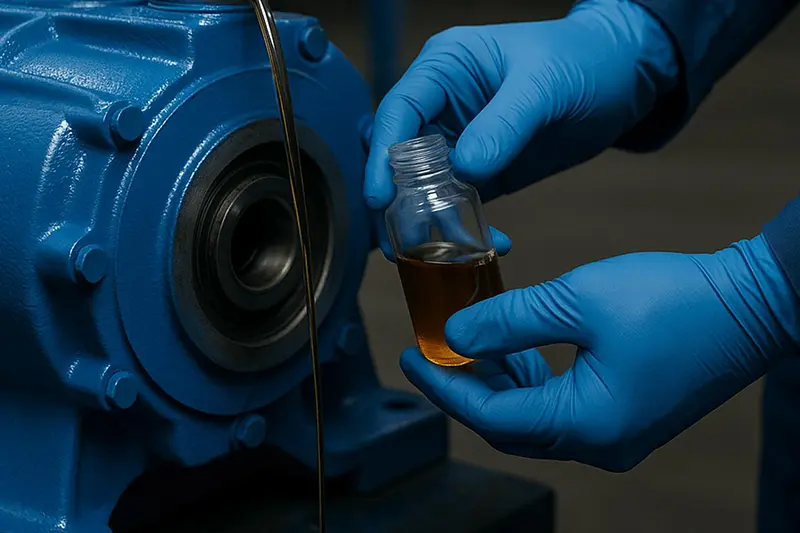
When checking oil level, first follow the shutdown time and check conditions in the equipment manual so the oil settles into a state suitable for measuring. Correct level should follow the manufacturer’s level mark or sight-glass range — don’t treat one level height as a universal standard for every gearbox.
Never overfill the oil. Excessive level can increase churning resistance and operating temperature rise and, depending on design, increase seal leakage. Too low a level can starve gears and bearings, and speed wear.
Oil change intervals also need to be set according to the particular model. Some equipment documentation provides a first oil change time and subsequent intervals, but those numbers don’t apply directly to every Jacquard gearbox. If you are selecting an oil, check the manufacturer’s required viscosity grade, performance spec and operating temperature range. Shell Omala 460, etc. are only suitable where they meet the lubrication requirements of the equipment involved. Do not select a product on the basis of the brand name or model name.
Checking oil level weekly, watching oil condition, and keeping an eye out for seepage around the housing is practical daily maintenance. As for change intervals, follow the equipment manual and adjust based on actual operating conditions and maintenance requirements.
Warning Signs: If You Hear It, Don't Sit on It
Before a gearbox fails, there are often changes worth noticing.
Increased vibration is one to watch. Compared with normal running, if housing vibration is noticeably stronger, or the foot bolts start loosening, check the mounting base, fasteners, coupling alignment, and driveline components. Internal gear or bearing problems can also cause vibration, but vibration alone won’t tell you where the fault is.
Abnormal noise deserves attention too. If the gearbox goes from a steady running sound to a continuous hum, periodic knocking, or obvious friction noise, check gear mesh, bearing condition, lubrication, and external driveline components. Different sounds point to different problems — further inspection is needed to determine the cause.
Oil seal seepage is another signal to address promptly. If oil traces appear near the housing bottom or shaft end, check the seals, shaft surface, oil level, and breather. Seal failure doesn’t just mean oil loss — it can also let dust or other contaminants into the gearbox.
One more diagnostic direction that gets overlooked: declining weave quality. If weft tension fluctuates, warp breaks increase, or the pattern occasionally goes wrong — alongside gearbox noise, vibration, or unsteady transmission — the gearbox and related driveline should be brought into the inspection scope. Gear wear, excessive transmission clearance, or timing errors can affect loom operation, but these weaving problems can also come from yarn condition, tension settings, the Jacquard mechanism, or the control system. Don’t jump straight to “gearbox failure.”
When you find something abnormal, work through it step by step against actual machine operation. For vibration that keeps getting worse, obvious metallic impact noise, or serious oil leakage, shut down and inspect per safety procedures — don’t keep running and let the damage grow.
The Bottom Line
A Jacquard gearbox failure isn’t necessarily the gearbox “wanting” to fail. The chain is slapping, startup is shock-loading it, lubrication is off, warning signs are being ignored — all of these gradually load up the driveline.
Check chain tension regularly, follow the startup procedure, check oil level on a schedule, and investigate abnormal noise promptly. These maintenance tasks don’t take much time, but they help cut unplanned downtime and parts damage. Skip them, and when the gearbox finally does fail, the cost may be more than the repair bill — it’s the wait for parts and the missed delivery dates.
REQUEST A QUOTE
OR GET MORE
INFORMATION
Leave us a message. We will contact within 12 hours.