
BLOG
BLOG
Lawn Mower Gearbox: Types and Maintenance Guide
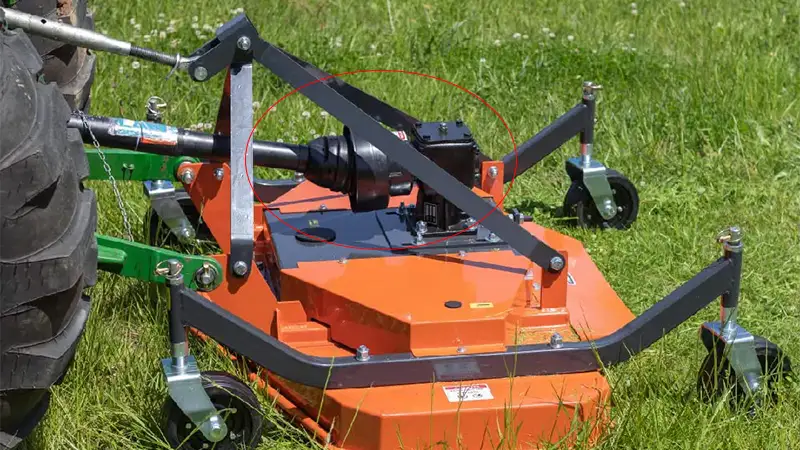
A lawn mower gearbox has a simple job, but it has to do it well. It takes power from the engine or PTO and sends it to the cutting system at the right speed and torque.
When the gearbox is well matched to the mower, the machine runs smoothly and works the cutting load more efficiently. A bad match can result in noise, vibration, overheating and early wear.
So, what do you need to know about lawn mower gearboxes? We will look at the main types, basic maintenance, and what you need to check for when you buy one.
1. Lawn Mower Gearbox Basics
From the outside, a lawn mower gearbox may just look like a metal housing. Inside, however, several parts are working together every time the mower is running.
Main Components
Basic parts are gears, shafts, bearings, seals and a lubrication system. The gears transfer the power through the gearbox and control the change in input speed from the output speed. Shafts carry that power with rotation. Bearing supports the rotating parts in a properly position. The seals have another role to play. They keep oil or grease inside and keep dirt and moisture outside.
Not every lawn mower gearbox is built the same. A small mower and a tractor-driven agricultural mower can have very different gearbox specifications.
How does a lawn mower gearbox work?
The engine or PTO rotates the input shaft. From here, gears pass this rotation through the gearbox and drive the output shaft.
What happens to the speed and torque will depend on the gear ratio. For instance, a reduction gearbox slows the output down but gives the cutter system more torque.
That extra torque becomes very useful if the mower plows into thick grass or heavier vegetation. The engine is not directly exerting the full cutting load on the machine, so the gearbox is giving the power in a more useful way.
Why Lubrication Matters
There is a lot of movement inside a gearbox. Gears mesh with each other, bearings rotate, and all of these parts are working under load.
Without enough lubrication, friction and heat can build up. Oil or grease creates a protective layer between the moving surfaces and helps limit wear.
It is worth checking the lubricant regularly. A low level, a visible leak, or badly contaminated oil can all be signs that something needs attention. Always use the lubricant and service interval recommended for the gearbox.
2. Common Types of Lawn Mower Gearboxes
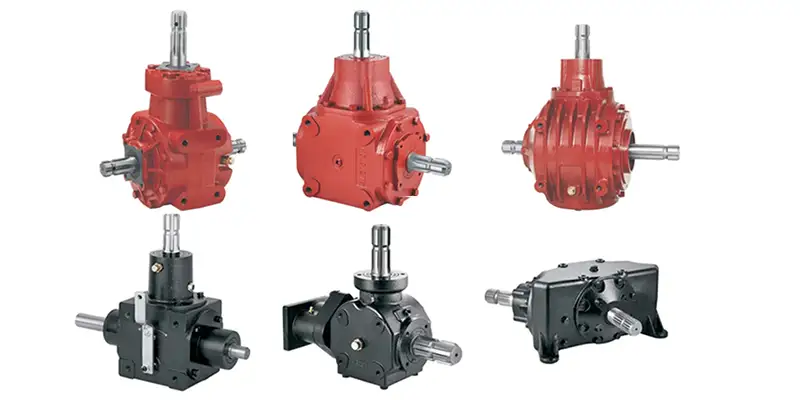
The gearbox used on one mower may not be suitable for another. Shaft arrangement, available space, required torque, and output speed all come into the selection.
Four types are commonly seen in mower and agricultural machinery applications: spur, bevel, worm, and planetary gearboxes.
Spur Gearboxes
Spur gears have straight teeth and a fairly simple layout. They are a practical choice when the input and output shafts need to run in the same direction.
Power transmission is efficient, and maintenance is usually straightforward. There is a downside, though. Straight teeth can generate noticeable noise as speed increases.
Bevel Gearboxes
Sometimes the power needs to turn a corner. That’s where a bevel gearbox can be useful.
Its conical gears transfer power between shafts set at an angle, often close to 90 degrees. This arrangement works well when the PTO or engine is not directly in line with the cutting shaft.
The compact layout is another advantage for mower designs with limited installation space.
Worm Gearboxes
A worm gearbox uses a worm and worm wheel. This setup is often chosen when a large speed reduction and higher output torque are needed without using a very large gearbox.
Worm drives can run smoothly and relatively quietly. They also have more sliding contact between the gear surfaces, which can create additional heat. Good lubrication is particularly important here.
Planetary Gearboxes
Planetary gearboxes take a different approach. A sun gear, planet gears, and ring gear work together, allowing the load to be shared across several gears.
The result is a gearbox that can handle high torque without taking up as much space as some conventional designs. For demanding agricultural equipment, that combination can be useful.
3. Lawn Mower Gearbox Maintenance and Common Problems
Even if you don’t need to open the gearbox, there can be a sense that something is wrong. Changes in sound, vibration, temperature or lubricant condition can give you a warning early. These tests can be part of routine maintenance:
- check for oil or grease leaks all around the housing
- listen for grinding, whining and knocking
- pay attention to any unusual vibration
- check accessible gears, bearings and seals for wear
- check lubricant level and condition
- keep grass, soil and water away from the gearbox
It is not always the cause that is the same. Grinding could be cause by worn gears or bearings. It could be a leak from a damaged seal or gasket. Excessive vibration may have something to do with worn gears, bearings or other components, and alignment, and unbalance of the rotating part.
If the gearbox starts behaving differently, it is better to check it early. Continuing to run damaged gearbox components can worsen the loads imposed on the rest of the drivetrain and make the repairs more expensive.
4. Custom Agricultural Lawn Mower Gearboxes
A standard gearbox is not always the right answer.
Agricultural mower manufacturers may need a specific gear ratio, shaft size, mounting pattern, or housing dimension. In these cases, a custom lawn mower gearbox can be built around the machine instead of changing the machine to fit a standard gearbox.
Depending on the application, customization may cover:
- Gear ratio and output speed
- Input and output shafts
- Mounting dimensions
- Torque capacity
- Housing size
- Lubrication requirements
This can be useful for both new equipment and replacement projects, especially when an existing gearbox is no longer available or does not meet the current machine requirements.
5. About JENA
JENA provides gearbox and transmission solutions for agricultural , including lawn mower gearboxes.
Mowing equipment can face changing loads, long working hours, vibration, dust, and moisture. The gearbox needs to handle these conditions while keeping power transmission stable.
JENA offers gearbox configurations for different applications, with options for gear ratio, shaft arrangement, mounting configuration, torque capacity, and other key specifications.
Key benefits include:
- Reliable power transmission
- High torque capacity
- Durable construction
- Compact designs
- Flexible mounting options
- Multiple gear ratios
- Custom gearbox solutions
When choosing a lawn mower gearbox, don’t look at dimensions alone. Check the speed, torque, shaft configuration, mounting dimensions, and working conditions as well.
If you need a lawn mower gearbox for agricultural machinery, OEM replacement, or a custom application, JENA can help you select or develop a gearbox that fits your equipment requirements.
REQUEST A QUOTE
OR GET MORE
INFORMATION
Leave us a message. We will contact within 12 hours.