
BLOG
BLOG
How to Choose the Right Flail Mower Gearbox for Your Machine
Choosing a gearbox for your flail mower — most people get the first step wrong. Instead of reaching for a spec sheet, start by figuring out one thing: what kind of gearbox does that machine’s input actually want to mate with? Matching the rated power and getting the mounting holes to line up is the bare minimum.
Whether it runs smooth or vibrates, runs cool or hot, survives a shock load or folds under one — all of that comes down to whether you got that first step right.
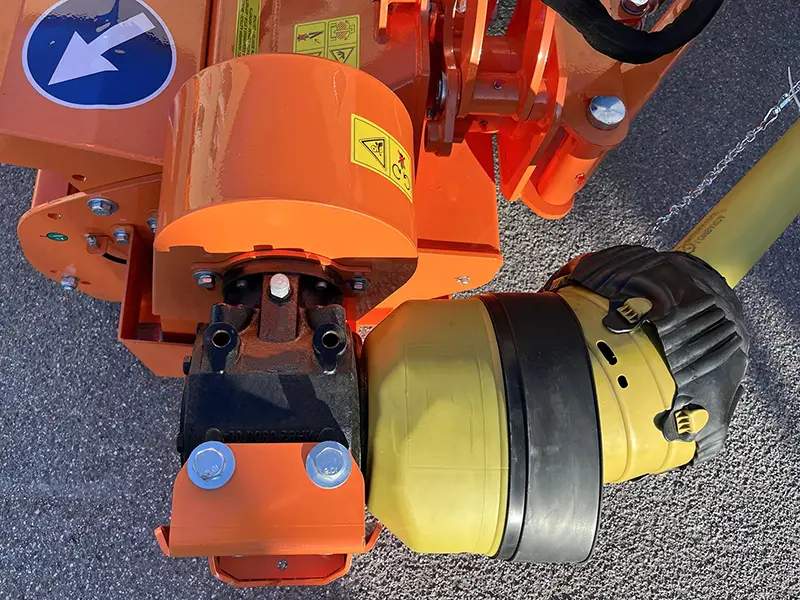
Figure Out What Your Machine Actually Needs
Before you open any gearbox catalog, write down your mower’s brand, model, cutting width, and the conditions you most often mow in. Flail mowers and rotary cutters don’t share gearboxes.
If you’re replacing a worn unit, take a few photos of the old gearbox: one mounted on the machine, one off the machine, close-ups of the input and output shaft interfaces, and the nameplate. Better yet, put a ruler in the frame next to the mounting hole spacing and shaft diameters.
It sounds tedious, but it saves you the back-and-forth of returns. Plenty of “close enough” gearboxes turn out to be off by just a little — a flange hole that won’t line up, or a spline count that’s wrong.
Power Matching: Don't Just Read the Number, Read How You'll Use It
A gearbox’s power rating is established under specific conditions. A unit rated at 45 hp doesn’t mean you can bolt it to any 45 hp tractor and call it done. What matters is what you’re cutting and how.
If you’re mainly mowing flat pasture under light load, you’ve got some wiggle room in selection. But if you’re taking on heavy brush, orchard prunings, or uneven ground with hidden obstacles, shock loads can far exceed those produced during steady cutting.
Stones hidden in grass, for example, can put sudden stress on the output shaft, gears, and bearings.
So the rule for power matching is: size it for the hardest work, not the average work. If the gearbox rating sits right at your tractor’s PTO horsepower and you regularly cut brush, you’re basically gambling. Leaving margin costs less than the alternative.
Gear Ratio and Rotation Direction: An Easy Trap to Fall Into
Flail mower gearboxes often use a speed-increasing ratio, taking the tractor’s 540 RPM PTO input and increasing the rotor speed. Some designs use a ratio of approximately 1:3, which would give an output speed of around 1,620 RPM from a 540 RPM input.
Actual output speed requirements vary by mower design, so always check the gearbox specifications and the mower manufacturer’s recommended rotor speed.
But here’s where people get burned: rotation direction. Different brands and mounting positions can have different output rotation directions. A replacement gearbox may fit the mounting flange but still rotate the rotor in the wrong direction.
Look at the input and output rotation for your original gearbox or check the manufacturer’s documentation before purchasing. When checking the old unit by turning a shaft by hand, ensure that the machine is completely disengaged from the PTO and that the proper safety measures are being followed.
And don’t assume that because the rotation direction of the gearbox is correct, the gear ratio will be too. Both specs need to be compatible with the machine.
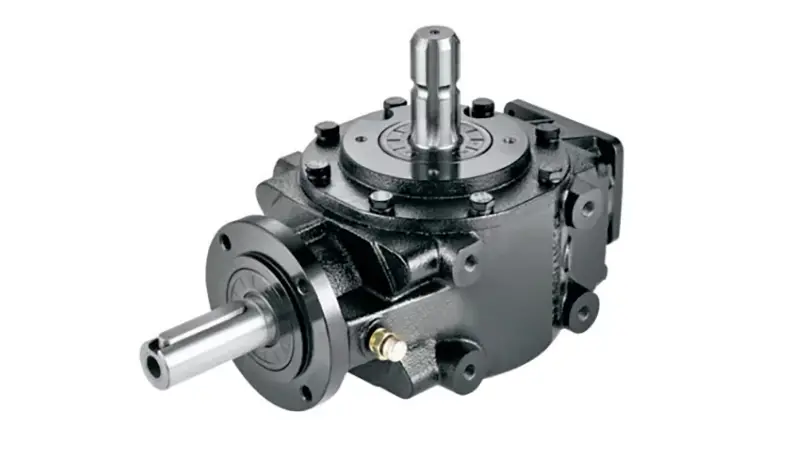
Protection Devices: Get This Wrong and the Gearbox Pays for It
No gearbox, however stout, is guaranteed to survive a jam or a rock strike without suitable overload protection. Flail mower driveline systems commonly use shear bolts or slip clutches to help protect the gearbox.
Some machines may use other protective arrangements, while others rely on a direct-drive setup without a separate overload device. The correct configuration depends on the machine’s design.
Shear bolts are cheap and simple — the bolt snaps first and helps save the gearbox. The catch is you have to stop and replace it. Some operators, looking to avoid that hassle, replace the specified bolt with a higher-grade one.
That can defeat the intended protection and transfer more stress to the gearbox and other driveline components.
Slip clutches cost more but can slip repeatedly without requiring a bolt replacement. The disadvantage is that if they’re not maintained, the friction disks can rust together and stop providing the protection they are intended to.
After a season in storage, check the clutch and service or check it according to manufacturer’s instructions. On some models the friction disks have to be separated or the clutch adjusted prior to use. The procedure and settings vary from model to model.
Do not loosen spring nuts or operate the PTO to test a clutch unless the manufacturer specifically calls for it, and the necessary safety precautions are in place.
Which one? If you’re cutting where rocks or wire might be hiding, or conditions are unpredictable, a properly sized and maintained slip clutch may be more forgiving. If the ground is relatively clear and the machine is designed for shear-bolt protection, shear bolts may be sufficient.
Either way, don’t change the shear bolt grade on your own. Use the specification provided by the manufacturer.
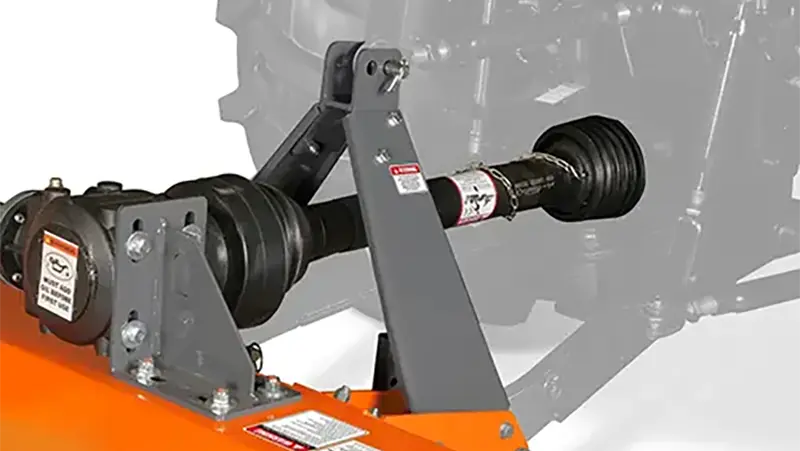
Cooling and Lubrication: The Silent Elements That Determine Gearbox Life
Refer to the handbook for gear oil. While some gearboxes call for API GL-5 SAE 85W-140 or SAE 90, others need a different grade. These oils are not interchangeable.
Using the designated level plug or another approved checking point, fill and check the oil level in accordance with the manufacturer’s recommendations. Don’t add more oil than the gearbox needs because overfilling might raise operating temperature and churning losses.
Cooling is not something that buyers usually ask about first, but it is important in the field. Internal temperatures can rise when you’re working long hours in hot weather or cutting dense material with heavy resistance.
Heat dissipation is affected by gearbox housing design and surface area, material properties, lubrication, and operating load. If you have a heavy workload, ask about the housing design, cooling performance, and recommended operating conditions.
It’s not enough to look at the material of the housing to judge durability; cast iron and aluminum each have advantages, and the overall design and rated capacity are equally important.
The Bottom Line
Choosing a gearbox is not as simple as selecting a bolt-on part. It’s about finding a unit that can handle your toughest working conditions.
Set an appropriate power margin, check rotation and ratio, select the protection device that fits your machine and operating risks, and do not skimp on lubrication and cooling. Get those four right and you won’t have a gearbox as the weak link in your mowing season.
REQUEST A QUOTE
OR GET MORE
INFORMATION
Leave us a message. We will contact within 12 hours.