
BLOG
BLOG
Oil Leaks in Agricultural Gearboxes: Causes and Fixes
Oil Leaks in Agricultural Gearboxes: What Causes Them and How to Deal With the Problem
On farm equipment, the gearbox is the part you really can’t afford to lose. A rotary cutter, tiller, or fertilizer spreader might run for hours a day under load, and the gearbox takes the worst of it: constant vibration, dust, heat swings, and mechanical stress.
Leaks come up a lot during maintenance. Operators will sometimes see a few drops around the housing and keep working. I get it, but even a slow seep is worth a look. It usually points to something going wrong deeper inside.
Oil does more than stop the gears and bearings from grinding. It pulls heat out of the box, coats the internal surfaces, and slows wear on everything inside. Once it starts leaking out, the trouble is almost never just the leak you can see.
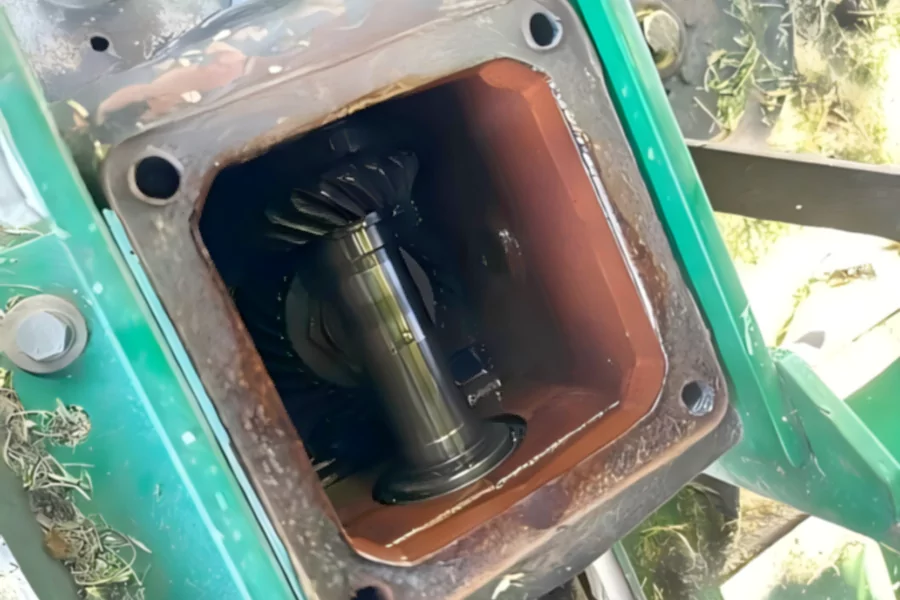
Why gearboxes start leaking
There’s rarely a single cause. In the field, you usually have to check several things before you know what you’re actually fixing.
Oil seals wear out
Oil seals are the weak point in most agricultural gearboxes. They sit against rotating shafts, deal with pressure changes and hot oil, and get covered in whatever’s floating in the air.
Run them long enough and the rubber hardens and loses its spring. In a dusty field, grit works between the seal lip and the shaft and chews both of them up.
The usual sign is oil around the input or output shaft. Most people’s first move is to swap the seal, and often that does the job. Not always, though. If the shaft already has a wear groove or the bearing has play, a fresh seal will start weeping again within a few weeks. That’s why anyone who’s done this more than once checks the shaft and bearing before fitting a new seal.
Blocked breathers build pressure
A clogged breather is easy to miss, and it accounts for more leaks than people expect.
The oil inside heats and cools as the machine runs, so the air pressure inside the case keeps changing. The breather is what lets that pressure equalize with the outside.
But fields are full of dust, soil, and damp, and those clog the breather vent over time. With nowhere else to go, the trapped pressure pushes oil out through the nearest seal or gasket. In that case, fitting a new seal without clearing the breather just buys you a few days.
Wrong oil level or wrong oil
Both directions cause trouble. People sometimes overfill, thinking more oil means better protection. It doesn’t. When the box gets hot, that extra oil expands and forces its way past the seals.
Running low is just as bad. Without enough lube, the gears and bearings run hot, wear faster, and the extra heat eventually works the seals loose. Stick to what the manufacturer specifies for that gearbox, and for the conditions you’re actually working in.
Worn bearings and other mechanical faults
Bearings keep the shaft where it belongs. Once they start to go, the shaft wobbles a touch, and that wobble rides on the seal lip and tears it from one side. That’s how you get a leak that was never really about the seal.
Lots of things wear a bearing out early: overloading the machine, a careless install, constant vibration, or just years of hard service. If the box keeps leaking after two seal changes, don’t fit a third one yet. Find out what’s actually moving first, because chasing the seal gets expensive fast.
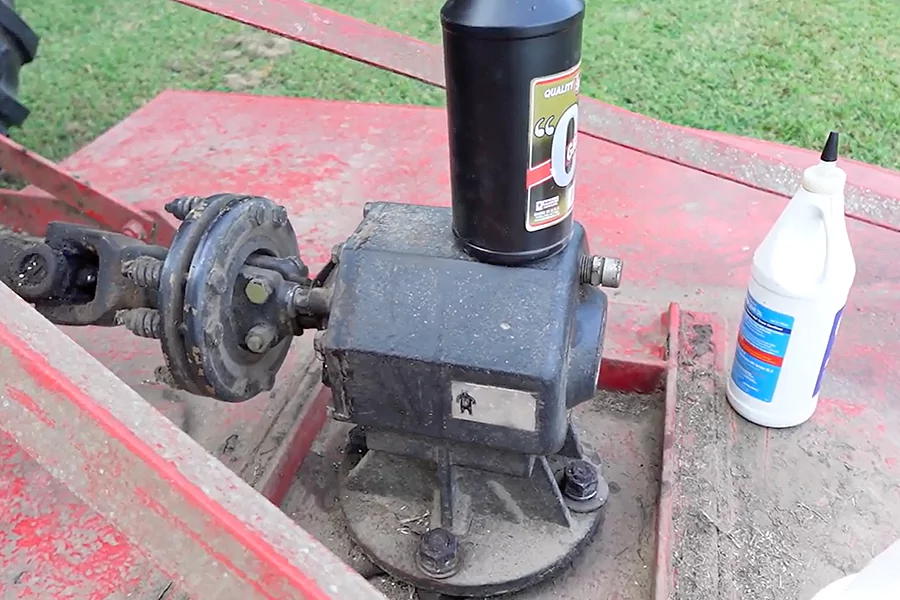
Fixing a leak: where to start
Start by finding the actual leak point. Wipe the case clean before you take anything apart, otherwise you’ll never tell whether the oil is weeping from a shaft seal, a cover joint, the drain plug, or a crack you hadn’t spotted.
Once you know where it’s coming from, run through the obvious checks:
- Is the oil at the right level?
- Is the breather clear?
- Are the seals damaged or seated wrong?
- Do the shafts and bearings show wear or play?
If it’s just age-hardened seals, new ones will likely sort it. But if the shaft’s scored, the bearing’s loose, or the case is distorted, you’re looking at a proper rebuild.
Keeping leaks away
Checking things before they break beats fixing them after. A few habits make a real difference:
- Check oil level often
- Look at the seals during regular servicing
- Keep the breather clean
- Don’t overload the machine
- Listen for odd vibration or noise
- Match the oil to the job
If you’re building or spec’ing equipment, the gearbox itself matters as much as the maintenance. Pick one with a sealing design and build quality you can trust.
On gearboxes from JENA
A gearbox holds up or doesn’t based on details most people never see: the materials, how accurately it’s machined, how the seals are designed, and whether quality control means anything on the line.
That’s the part JENA works on. They make agricultural gearboxes for rotary cutters, tillers, fertilizer spreaders, and similar machines, and they’ve been at it long enough to know what fails in the field. Over the past few years they’ve tightened up their design and production so their gearboxes can go longer between services.
If you’re sourcing gearboxes and want a supplier who understands how the equipment actually gets used day to day, that’s worth asking about. A manufacturer who’s seen where these boxes break will save you headaches down the line.
REQUEST A QUOTE
OR GET MORE
INFORMATION
Leave us a message. We will contact within 12 hours.